Digiata offers financial services companies the best of both worlds. First, an industry-leading comprehensive data migration framework that is based on years of experience. Then, Digiata works closely with its customer’s in-house experts and the target system vendor to define a comprehensive, customised data migration plan. Any Digiata data migration is underpinned by the ability to move data from any source, to any target, any way.

Data Migration Framework
Timeline
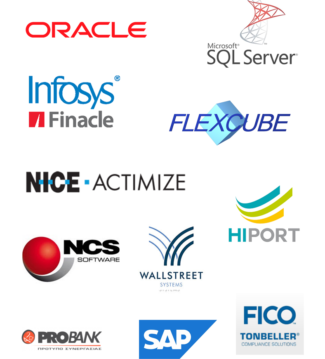
TARGET
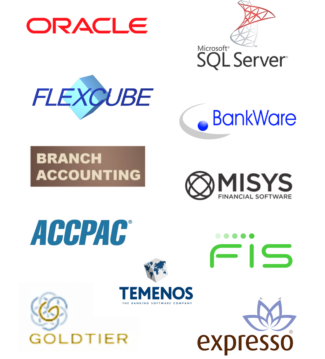
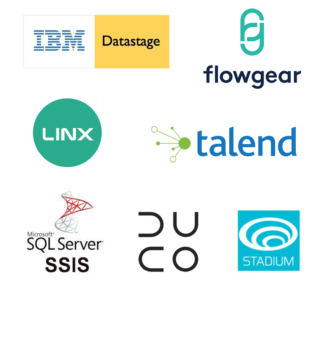
Any Source, any Target, with any Tool
Sources
Tools
Targets
FAQ
While we have preferred tools, our data migration framework is tool agnostic. Based on the specific requirements of your data migration needs, the best data migration tool will be used for migrating your data.
All data migration projects are different, and the duration of a data migration project is determined by different factors, such as – number of sources, quality of the data and the level of unstructured data in the sources.
Yes, Digiata is equipped with the necessary skills and required tools to allow data migration to be done from multiple different source systems providing data in a variety of different formats.
Any data flagged as PII (Personally Identifiable Information) will be kept secure throughout the data migration process by means of Dynamic Data Masking and/or encryption.
Yes, Data cleansing will form part of the migration process and can be done using three different approaches; at source, in-flight and at target. We will guide you on the best approach for your project.
Identification and handling of duplicate records is done by custom rules implemented in our migration process.
Multiple times. The number of test/dry runs will be dependent on the data quality at source, the amount and complexity of transformation applied and the migration strategy which could be either big bang or campaign based. A typical data migration project will plan for between 3 and 5 test/dry runs before the final migration is executed.
We have a proven remote working methodology, which includes international travel for on-premises work such as requirements definition, progress workshops and deployment. Our data migration framework provides defined phases which allows us to precisely plan and carry out remote work. Our experienced software engineers have successfully delivered a number of large data migration projects in this manner.